NYCWISE · MODULE 04 / 10
Rent the Right Apartment
Turn apartment hunting into a series of concrete checks: location, upfront costs, building condition and records, and the lease you are about to sign.
Five screens. Five practical decisions.
These are the five topics included in this module of the final NYCWISE app.
- 01
Where to look
Start from your regular destination, direct transit options and a defined affordability limit.
Before you open a listings site, answer three questions. They decide which neighborhoods are worth your time.
- 02
What you actually pay to move in
Examine first rent, security deposits, application or credit-check costs and broker fees.
Five kinds of money can come up before you get the keys. New York law limits several of them.
- 03
Know your building
Check building-level details rather than relying only on apartment photographs.
What kind of New York building are you about to rent in — and what should you check because of it?
- 04
The apartment looks good. What has actually happened in this building?
Use available NYC building-record information to ask better questions about a property.
Age and type tell you what to check. Official records tell you what has actually been reported or recorded.
- 05
Before you sign: check these 5 things
Verify rent, lease term, deposits, utilities and important promises in writing.
You already have the lease. Read it with this list next to it.
PRACTICAL NYC ANSWERS
Questions to answer before you decide
The practical rental decision is not just whether an apartment looks good. It is whether the full monthly cost, building record, broker relationship and written lease agree with what you were promised.
What should I check before applying for an NYC apartment?
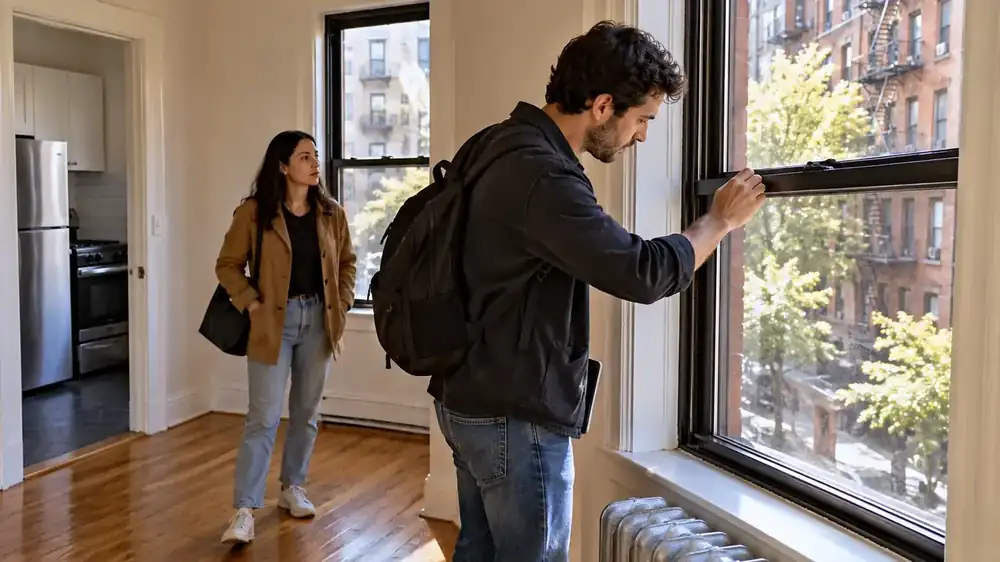
Start with the location and commute, then compare your complete recurring costs. Ask who is offering the unit and what documents they expect. Keep a consistent viewing checklist, because photos rarely show window condition, water pressure, stair access or the common areas of the building. An apartment can look attractive while remaining a poor practical fit.
Who pays the broker fee under NYC's FARE Act?
The FARE Act took effect June 11, 2025. Under the city's guidance, a broker representing the landlord, including an authorized listing agent, cannot charge that broker fee to the tenant. Tenants may separately choose to hire their own broker. The relevant question is who hired or represents the broker; request the current itemized disclosure rather than accepting an unexplained fee.
How can I investigate a building's history?
NYC HPD Online provides records that may include housing complaints, violations and registration information. The Department of Buildings provides building history, permits and other records through its systems. Check whether reported issues are open or resolved and look for patterns; a single historical complaint is not proof that a unit is unsafe, nor does a clean record replace an inspection.
What belongs in the final lease check?
Match the written document to the actual unit, monthly rent, term, included utilities, deposit, itemized fees and promises about repairs or concessions. Record questions before signing; do not assume an oral assurance overrides the written terms. For a legal dispute or ambiguous clause, consult an appropriate professional rather than a general moving website.
Useful references: DCWP: FARE Act · HPD Online: Housing records · NYC Buildings: Building history · Apartment viewing checklist. Official rules and prices may change.