NYCWISE · MODULE 05 / 10
Commute
See how transportation actually fits New York life: total car ownership costs, borough commute habits, walking distance to transit, cycling and the address you are considering.
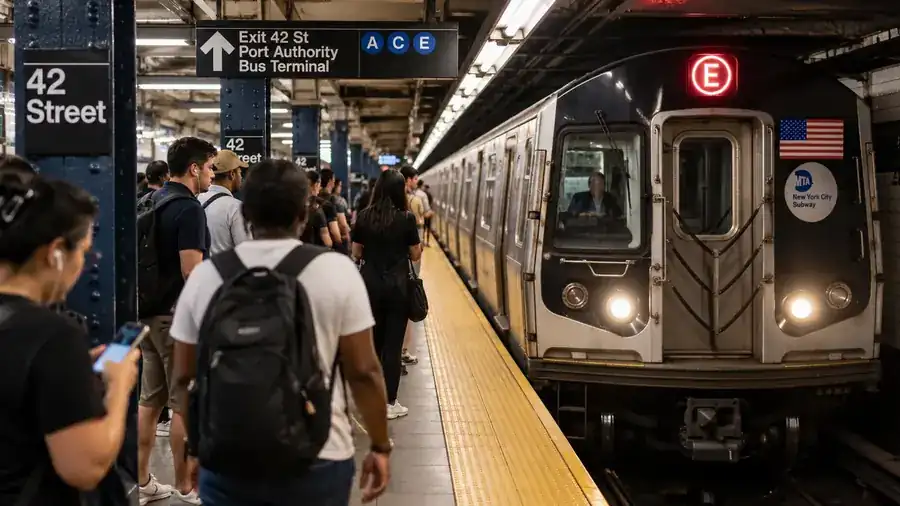
Five screens. Five practical decisions.
These are the five topics included in this module of the final NYCWISE app.
- 01
Should you own a car in NYC?
Compare insurance, parking, registration and other recurring ownership costs before deciding.
Buying the car is only part of the cost. In NYC, keeping it is the expensive part.
- 02
How New York commutes
See how travel modes differ across the five boroughs rather than assuming everyone uses the subway.
The same city, five very different answers. The three most common ways workers get to work in each borough:
- 03
How far from the subway is too far?
Think in repeated station walks and 10-, 15- and 20-minute distance thresholds.
You’ll make this walk twice a day, in every season, with groceries. Judge the walk the way you’ll actually live it.
- 04
Using a bike in NYC
Consider cycling across seasons, Citi Bike, recurring cost and where a bicycle can be kept.
You know how to ride a bike. What changes here: the weather, the docks, the stairs — and where the bike sleeps at night.
- 05
Put your possible home on the NYC transit map
Explore the surrounding transit context for a possible home address.
See how New York moves — subway, train, bus and bike — then place the apartment you’re considering and see what’s around it.
PRACTICAL NYC ANSWERS
Questions to answer before you decide
The best NYC commute is the trip you can repeat reliably, not necessarily the fastest trip shown on a perfect day. Compare door-to-door time, cost, transfers and alternatives.
Do you need to own a car in New York City?
There is no citywide yes-or-no answer. Start with the borough and neighborhood where you live, your work location and the trips you actually make. Compare parking, insurance, registration, tolls and time spent finding a space with transit, taxis and occasional rentals. A car can be valuable for some routines and an expensive liability for others.
How far from the subway is too far for a daily commute?
Treat the walk to the station as a repeated expense in time and effort. Compare 10-, 15- and 20-minute walks during ordinary weather, with groceries or luggage and after dark. Add the waiting and transfer time to the door-to-door calculation. A shorter walk to the wrong line may be less useful than a longer walk to a reliable direct service.
Is Citi Bike a replacement for owning a bike?
It depends on where you live and ride. Check bike and dock availability near both ends of your regular trips, how winter or rain affects your choices and whether your building offers sensible bike storage. Citi Bike membership terms and extra ride charges can change, so use the current official price and rules rather than a permanently quoted amount.
When should I trust a live map rather than the app?
For current directions, elevator status, fares and service disruptions, the MTA and live transit tools are authoritative. NYCWISE teaches the stable decision framework: which route works, what happens if it changes and whether the repeated journey fits your life. A static guide should never promise a particular train's current arrival time.
Useful references: MTA: Planned service changes · Citi Bike: Current membership information · NYC subway guide. Official rules and prices may change.